Ranking on Google in 2026 is like running a great TV ad in 1995 powerful on its own, but there’s a whole landscape of new channels where your audience is waiting to discover you.
SEO used to mean one thing: rank on Google. In 2026 it means at least five. It means showing up in ChatGPT’s answer. It means being cited by Perplexity. It means surfacing inside AI Mode. It means existing on the regional engine your audience actually uses. And yes, it still means ranking on Google but Google is no longer the whole game.
For more than two decades, Google has been the default for almost everything: quick questions, product research, directions, and keeping up with the news. That dominance is also why it has been the main focus for SEO and marketing professionals for so long.
Things started shifting once AI entered the picture. The rise of ChatGPT and Bing’s AI features pushed Google to fold chatbot-style answers into Search, first with AI Overviews and later with AI Mode, while OpenAI turned ChatGPT into a full search tool in its own right.
Google still holds the large majority of the market, but a growing list of alternatives now offer things it doesn’t: stronger privacy, independent indexes, specialized data, and AI-native answers.For marketers, that fragmentation is good news it means more entry points than ever to get discovered, each with its own audience ready to find you.
Here are 24 of the best alternative search engines worth knowing in 2026, grouped by what they actually do.
Table of Contents
AI-Powered Search Engines
- ChatGPT Search
- Google AI Mode
- Perplexity
Independent & Open-License Engines
- Yep.com
- Openverse
Mainstream Alternatives
- Bing
- Yahoo
- Ecosia
Privacy-Focused Search Engines
- DuckDuckGo
- Startpage
- Brave
- Kagi
- Mojeek
- Swisscows
- KARMA
Knowledge & On-Platform Search
- X (Formerly Twitter)
- SlideShare
- Wayback Machine
Specialized Search
- WolframAlpha
International Search Engines
- Baidu
- Yandex
- Sogou
- Naver
AI-powered search engines
These don’t return ten blue links; they read the web and hand you an answer. That convenience is also their risk: large language models can be confidently wrong, so verify anything that matters. They’re also the engines reshaping discovery fastest, which is exactly why we broke them down in AEO and GEO explained.
1. ChatGPT Search
Monthly Traffic To Domain: 5.84 billion
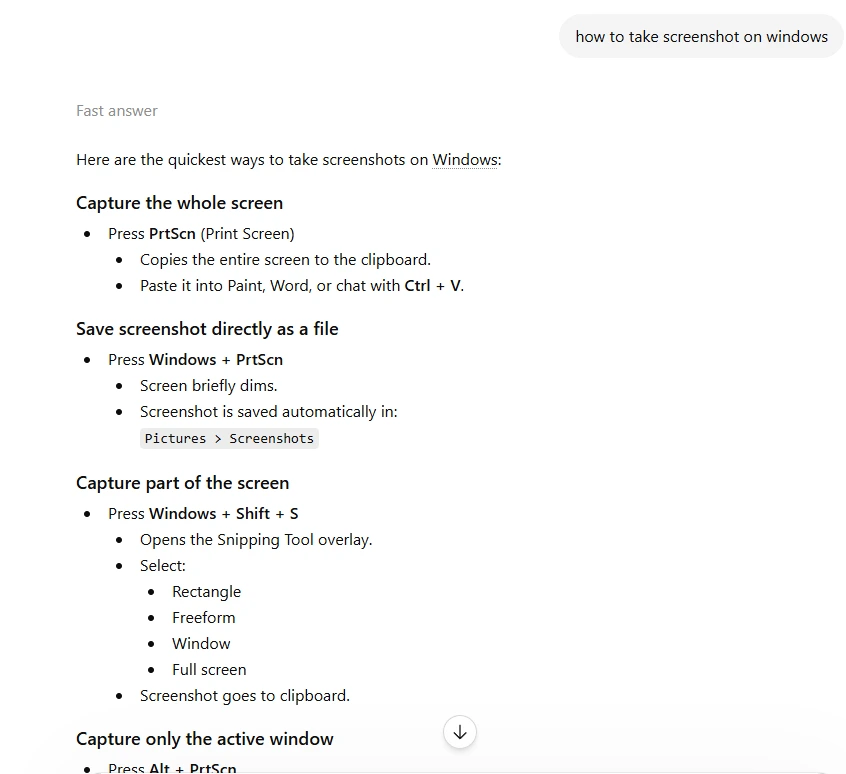
Screenshot from chatgpt.com, May 2026
OpenAI launched ChatGPT Search in October 2024, evolving its earlier SearchGPT prototype into a full search experience baked into the chatbot. Instead of a results page, you get a synthesized answer pulled from live web data with linked citations underneath. The feature started behind the paywall and is now open to all users, which is a big part of why it’s the most-trafficked AI search surface on the internet.
What makes it different:
- Conversational follow-ups that hold context across an entire thread, not just one query.
- Live web retrieval with attribution back to the original publishers.
- Publisher controls that let sites manage how their content appears in answers.
The catch is the one common to every LLM-powered tool: it can hallucinate or misattribute, so anything high-stakes still needs a second source.
Best for: anyone who’d rather ask a question than scan a results page.
2. Google AI Mode
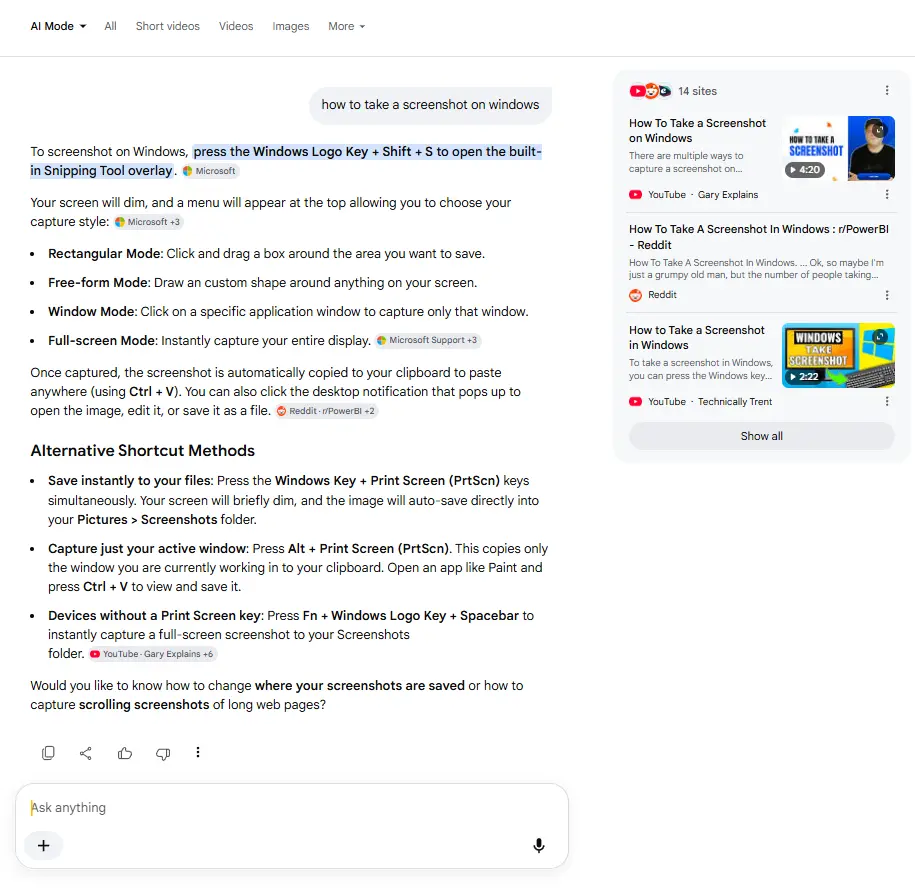
Screenshot from google.com, May 2026
AI Mode is Google’s deeper bet on AI-native search, rolled out in 2025 on top of the AI Overviews experiment. It layers reasoning and dialogue into Search itself, so instead of refining keywords across multiple queries, you can explore a topic in one continuous thread without leaving the Google ecosystem.
It’s designed for the messier queries comparisons, trade-off questions, anything that needs multiple sources stitched together. AI Mode lets users:
- Ask follow-up questions and keep conversation history.
- Pull in information from many web sources at once.
- Interact by text or voice, and bring in images for multimodal queries.
Availability is still gated by region and account eligibility, and as with every AI surface, the synthesis can smooth over nuance you’d catch in the raw results.
Best for: searchers who want AI synthesis without leaving Google and a preview of where mainstream discovery is heading.
3. Perplexity
Monthly traffic to domain: 179.5 million
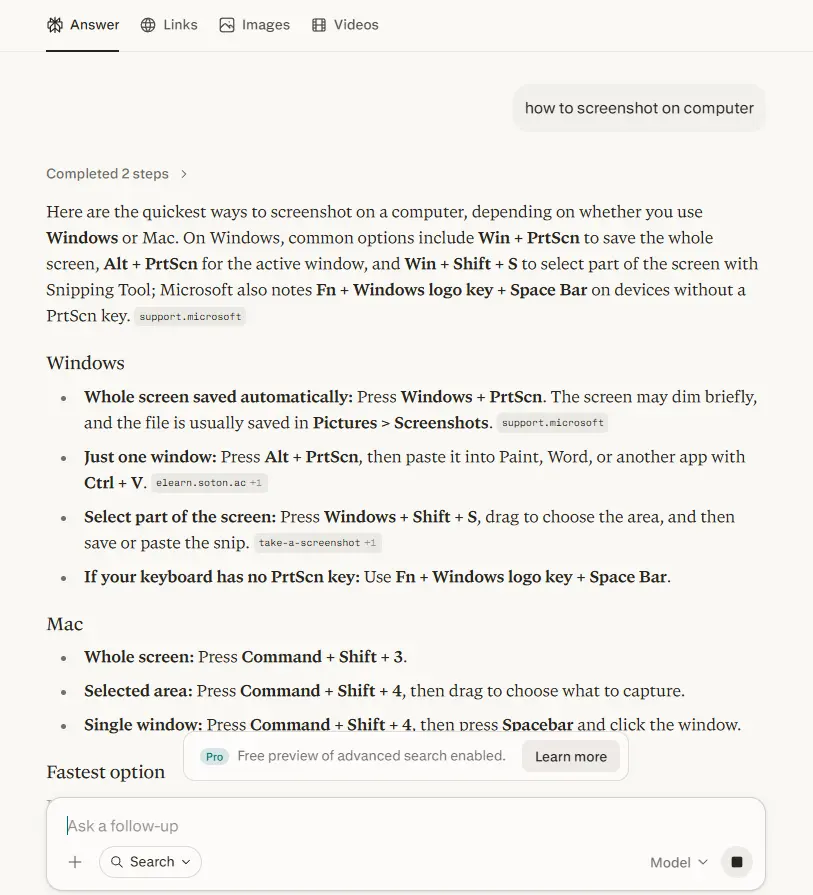
Screenshot from perplexity.com, May 2026
Founded in 2022, Perplexity built its whole identity around the thing other AI tools bolted on later: citations. Every answer footnotes the sources it drew from, and a conversational thread lets you keep asking follow-ups without restarting the query. The result feels less like searching and more like having a researcher hand you a briefing with the footnotes attached.
Under the hood it blends multiple search backends with its own models, which gives it broad coverage but also means accuracy varies. Its standout features include real-time web access, source-grounded answers, and a “Focus” mode that lets you constrain a search to academic papers, Reddit, YouTube, or specific domains.
Like any LLM tool, it can still hallucinate, so the citations exist for a reason.
Best for: researchers, analysts, and anyone who wants an answer alongside the receipts to verify it.
Independent and open-license engines
4. Yep
Monthly traffic to domain: 152,092
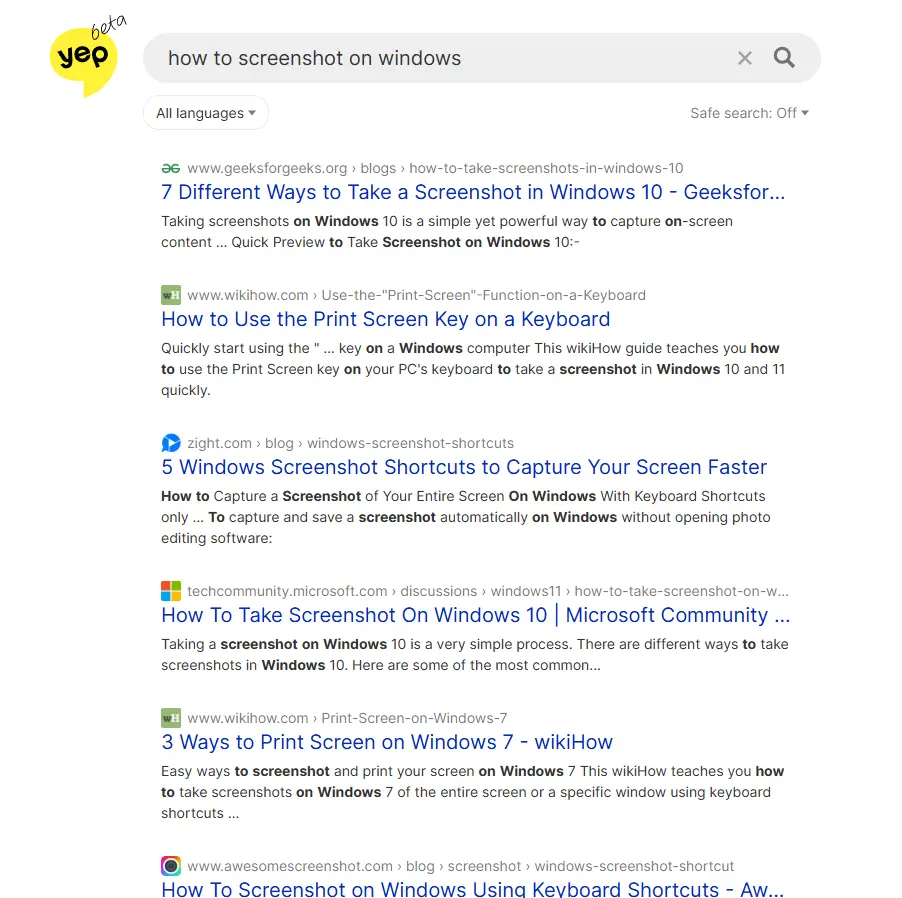
Screenshot from yep.com, May 2026
Yep is the search engine from the team behind Ahrefs, and it’s built around a deliberate inversion of how the industry usually pays out. Its 90/10 revenue split sends the bulk of ad revenue back to the creators whose pages surface in results, rather than the platform keeping the lion’s share. It’s a small but pointed experiment in what search could look like if it funded the open web instead of mining it.
On the privacy side, Yep tracks aggregate behavior that people search for, which links get clicks but doesn’t compile a personal profile or sell data. Traffic is modest compared with the giants, so it’s not where you go for marketing reach, but the model is worth watching.
Best for: people drawn to the idea of a search engine that funds the creators it surfaces instead of harvesting them.
5. Openverse
Monthly traffic to domain: 270,413
Screenshot from openverse.org, May 2026
Openverse isn’t trying to compete with Google, it’s solving a different problem: finding media you can legally reuse. Originally developed inside the WordPress ecosystem, it aggregates millions of openly licensed images, audio files, and other assets from open repositories like Flickr, Wikimedia Commons, and museum collections into one searchable index.
For anyone who’s burned by a stock-photo licensing email, the value is immediate. You can filter by license type, source, and usage rights so you know exactly what you can do with a given asset before you download it. The limitation is breadth: it’s narrower than a full image search, and quality varies because the catalog skews community-sourced.
Best for: marketers, designers, and bloggers who need visuals, audio, or other media without a licensing headache later.
Mainstream alternatives
6. Bing
Monthly traffic to domain: 3.4 billion
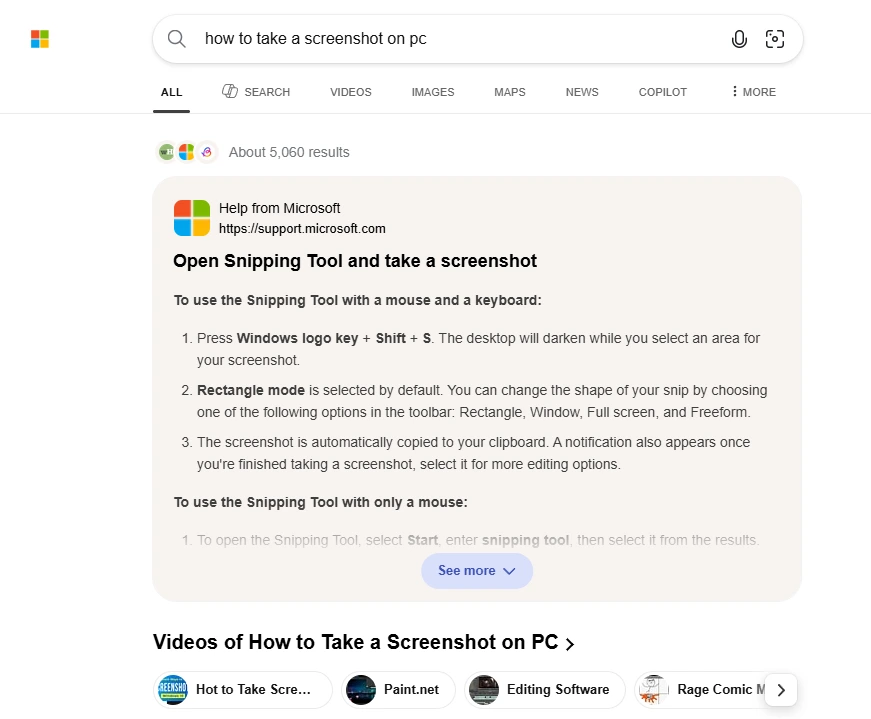
Screenshot from bing.com, May 2026
Microsoft’s engine has spent the last two years quietly clawing back relevance on the back of Copilot, which is now deeply integrated across Edge, Windows, and Microsoft 365. That distribution alone makes Bing the clear number two globally and a real factor in any market where Microsoft devices are common Microsoft has said Copilot’s daily active usage was up roughly tenfold year-over-year through early 2026.
Where Bing genuinely outperforms Google is in a few specific places: its visual and video search are noticeably cleaner, it’s the engine behind ChatGPT Search and several AI tools (so optimizing for Bing now indirectly affects AI visibility), and its Microsoft Rewards program turns searches into store credit. Quality varies on long-tail queries, but the index has improved markedly with LLM augmentation.
Best for: Windows-centric users and any brand that’s been ignoring Bing’s quietly rising share and its role as the backbone of multiple AI surfaces.
7. Yahoo
Monthly traffic to domain: 2.905 billion
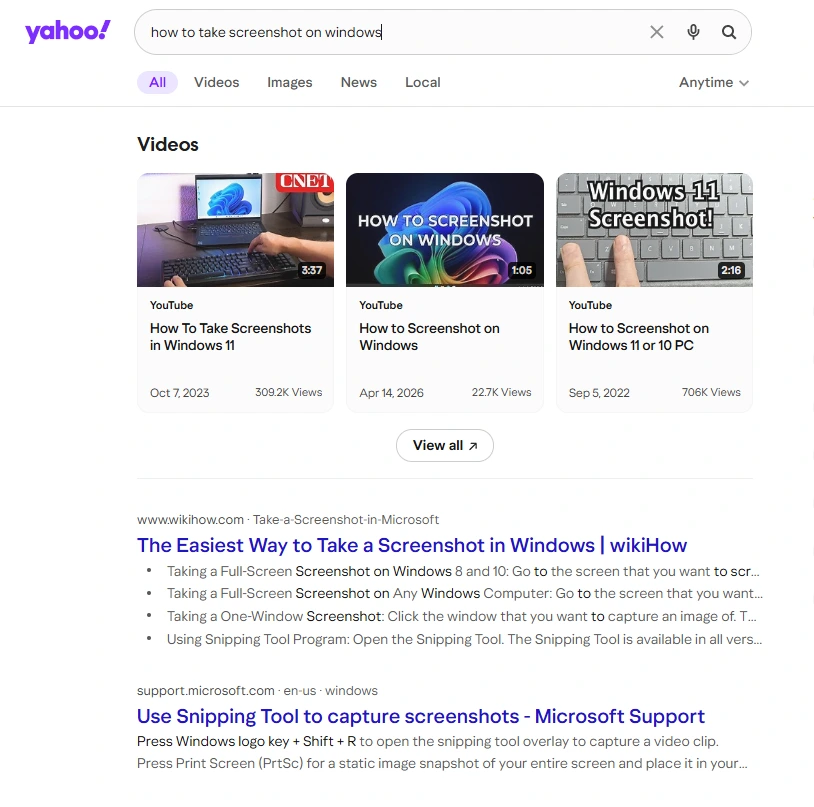
Screenshot from yahoo.com, May 2026
Yahoo survives less as a search engine and more as a portal mail, finance, news, sports, and weather all packaged into one homepage that millions of long-time users still set as their default browser landing. Its actual search results have been powered by Bing under the hood for years, so what you’re really getting is Bing wearing a different jacket.
That makes Yahoo less interesting strategically than it looks: optimizing for Bing already covers it. What Yahoo does have is a stickier-than-expected user base in specific demographics, particularly older U.S. users and certain markets like Japan where Yahoo Japan operates as a separate, genuinely large business. As a search destination on its own, the growth story isn’t there.
Best for: long-time users who live inside Yahoo’s news, mail, and finance ecosystem and treat search as an add-on.
8. Ecosia
Monthly traffic to domain: 221.3 million
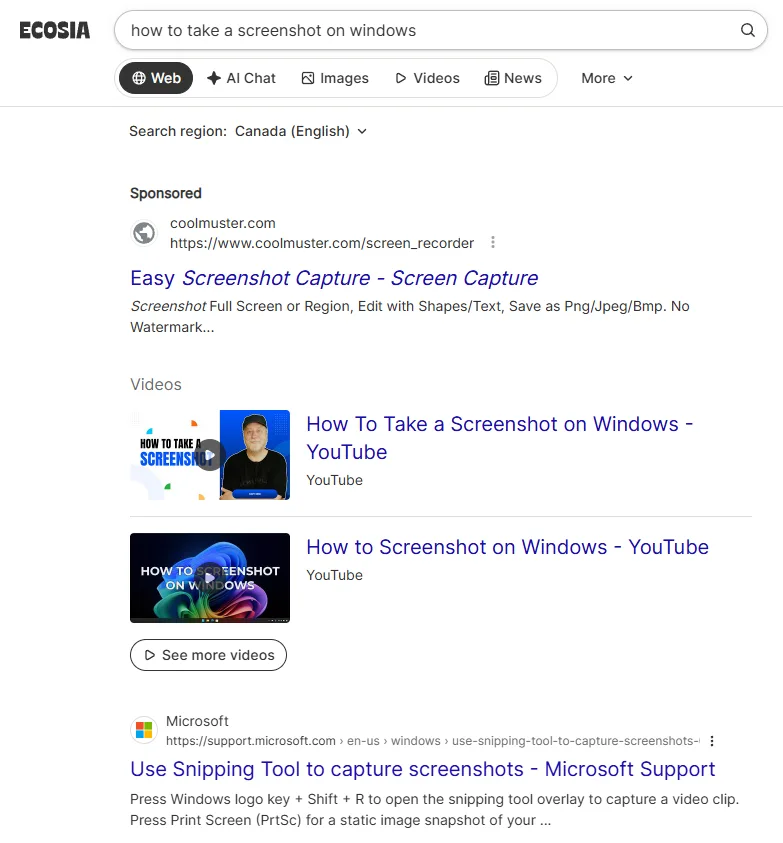
Screenshot from ecosia.com, May 2026
Ecosia is the not-for-profit engine that turned every search into a small environmental act. Based in Berlin, it dedicates the bulk of its profits to tree-planting projects run with local partners around the world, and publishes monthly financial reports so users can see where the money went. It’s a clean, simple value exchange that has built genuine loyalty in markets like Germany and the Netherlands.
The search itself runs on Bing’s index, layered with Ecosia’s own ranking and a heavy push toward sustainable sources where relevant. A free browser extension makes it easy to set as default across Chrome, Safari, Firefox, and Edge. The trade-off is that result quality is essentially Bing quality fine for most queries, weaker on long-tail technical searches than Google.
Best for: searchers who want their everyday queries to fund reforestation instead of shareholder returns.
Privacy-focused search engines
If you’d rather not be profiled, this is your category. These engines decline to build a dossier on you some resell mainstream results with the tracking stripped out, others crawl independently.
9. DuckDuckGo
Monthly traffic to domain: 713.5 million

Screenshot from duckduckgo.com, May 2026
DuckDuckGo is the privacy engine most people try first and for good reason. Founded in 2008 by Gabriel Weinberg, it’s the largest privacy-focused search engine in the world, pulling results from a mix of partners (including Bing) and its own crawler while storing none of your search history and building no user profile. There are no behavioral ads, no filter bubbles, and no persistent tracking across sessions.
It’s a credible everyday replacement for Google, with cleanly designed instant-answer modules, !bang shortcuts that jump you directly into other sites’ searches, and a mobile browser that strips trackers from every page you visit. The honest limitation is personalization: because it knows nothing about you, results don’t sharpen over time the way Google’s does.
Best for: anyone who wants mainstream-quality results without the surveillance and the easiest switch off Google for non-technical users.
10. Startpage
Monthly traffic to domain: 74.19 million
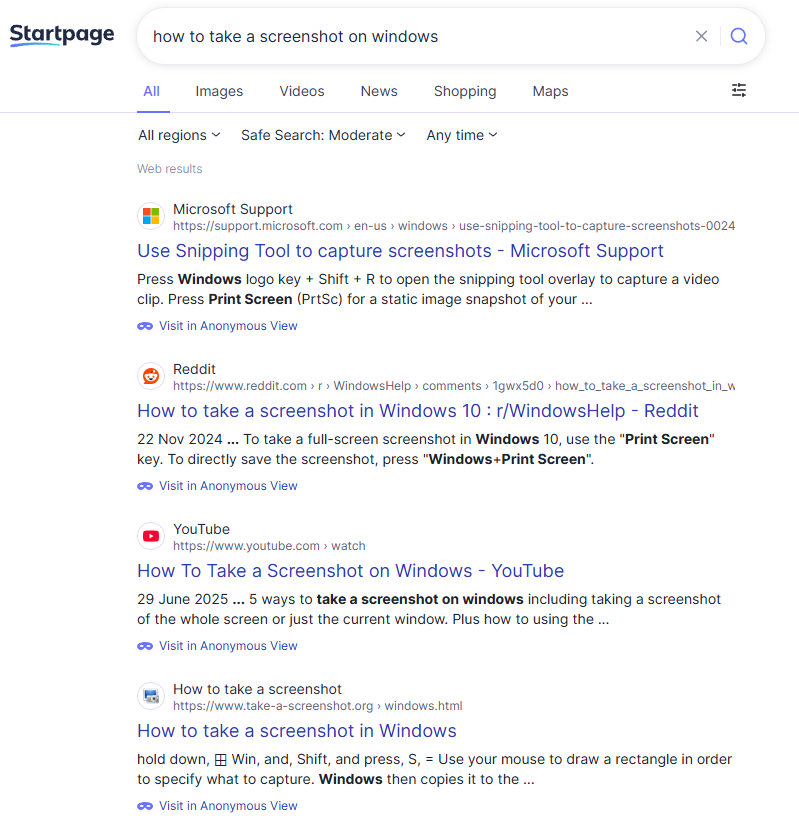
Screenshot from startpage.com, May 2026
Startpage solves a specific problem: you want Google’s results but you don’t want Google to know you searched for them. It acts as a privacy buffer, sending your query to Google, stripping your identity from the request, and handing you back the same results minus the cookies, profile-building, and personalized ads. It’s based in the Netherlands, so European servers and GDPR protections are an option you can lock in.
Beyond the results, it adds tools that go further than DuckDuckGo: an Anonymous View proxy that lets you click into result pages without the destination site fingerprinting you, plus a URL generator that remembers preferences without cookies. The trade-off is the one every privacy aggregator carries depends on a third-party index, so you’re exposed if that pipe ever changes.
Best for: people who want Google-quality results minus the filter bubble and data collection.
11. Brave Search
Monthly traffic to domain: 459 million
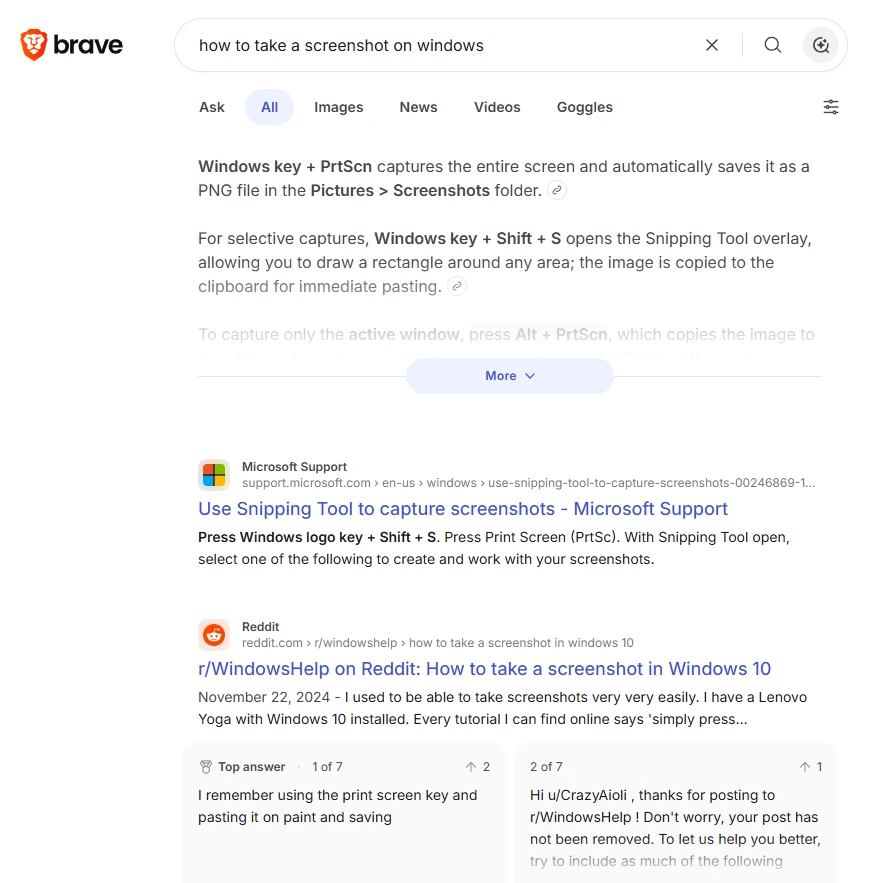
Screenshot from brave.com, May 2026
Brave Search is one of the few privacy engines that runs on a fully independent index with no Bing or Google underneath, just its own crawler. That makes it a genuine alternative rather than a privacy reskin of someone else’s results, and the index is now large enough to handle the vast majority of everyday queries without falling back to outside sources.
It ships baked into the privacy-first Brave browser, which blocks trackers and ads by default and offers optional rewards for opting into privacy-preserving ads. Distinctive features include Goggles (community-built filters that let you reweight results surface only independent news, or down-rank corporate sources), plus an AI summarizer for direct answers. The honest limitation is that the independent index, while strong, still has thinner coverage than Google on highly obscure long-tail queries.
Best for: privacy users who also want independence from Big Tech’s underlying infrastructure.
12. Kagi
Monthly traffic to domain: 4.18 million
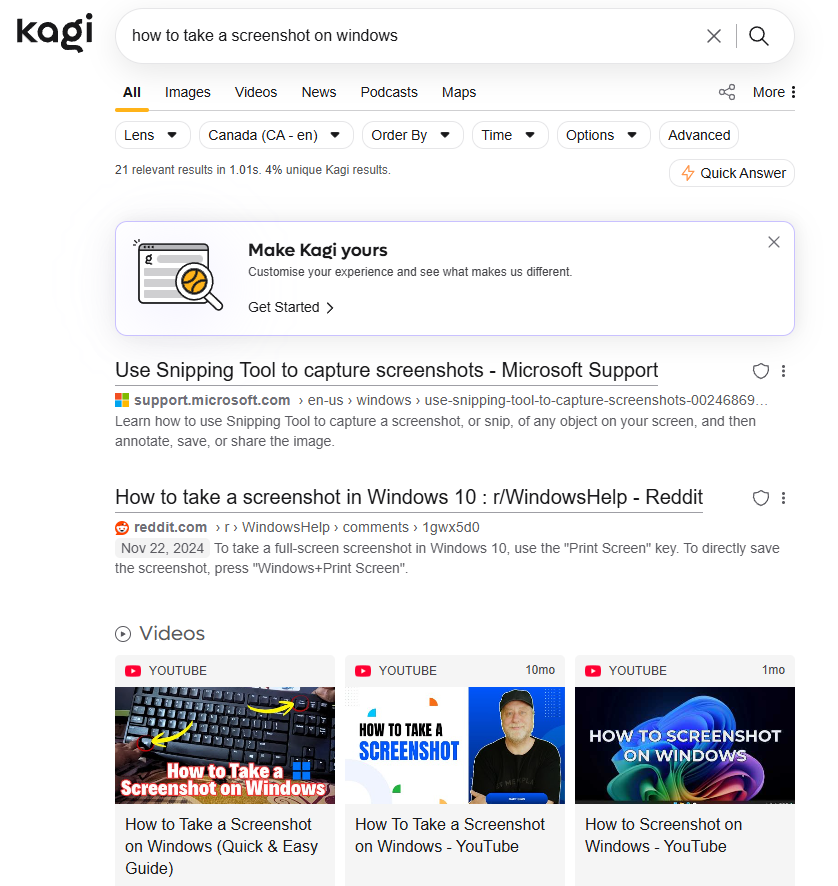
Screenshot from kagi.com, May 2026
Kagi is the paid rebel of search with no ads, no trackers, no surveillance economics, just a subscription and its own index pulled in from multiple sources including its in-house crawler (Teclis) and licensed third-party data. The idea is simple: when you pay for the product, the product is no longer you.
What makes it stand out:
- Lenses: custom filters that let you reweight results toward forums, academic papers, indie blogs, or whatever you want surfaced.
- Ad-free across the board: especially valuable on commercial or health-related queries where the ad layer normally drowns out organic results.
- Tiered plans: a Starter plan at around $5/month for ~300 searches, scaling to unlimited and Research mode at higher tiers.
The trade-off is obvious most people won’t pay for search and the small team means occasional rough edges and missing features.
Best for: researchers, journalists, and heavy searchers who’ll pay to escape ads and content farms entirely.
13. Mojeek
Monthly traffic to domain: 871,091
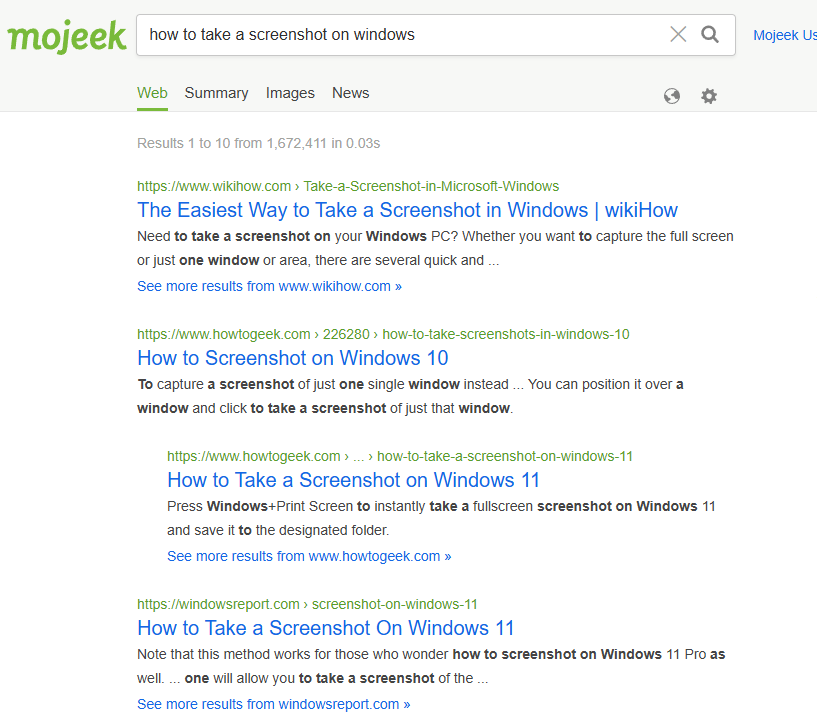
Screenshot from mojeek.com, May 2026
Mojeek is the scrappy UK independent that refuses to lean on Google or Bing. It runs its own crawler, MojeekBot, and indexes the web entirely on its own which makes it one of the very few search engines on the entire list that’s not ultimately a wrapper around someone else’s data.
Because it’s independent and doesn’t personalize, two people searching the same query get the same results, which Mojeek treats as a feature against filter-bubble bias. It often surfaces smaller blogs, forums, and forgotten corners of the web that algorithmic engines bury. The trade-off is real: the index is smaller, the interface is utilitarian, and recency on fast-moving topics lags the giants. You adapt how you search to get the best out of it.
Best for: people hunting pages the major engines bury, and anyone who values a truly independent, bias-resistant index.
14. Swisscows
Monthly traffic to domain: 856,173
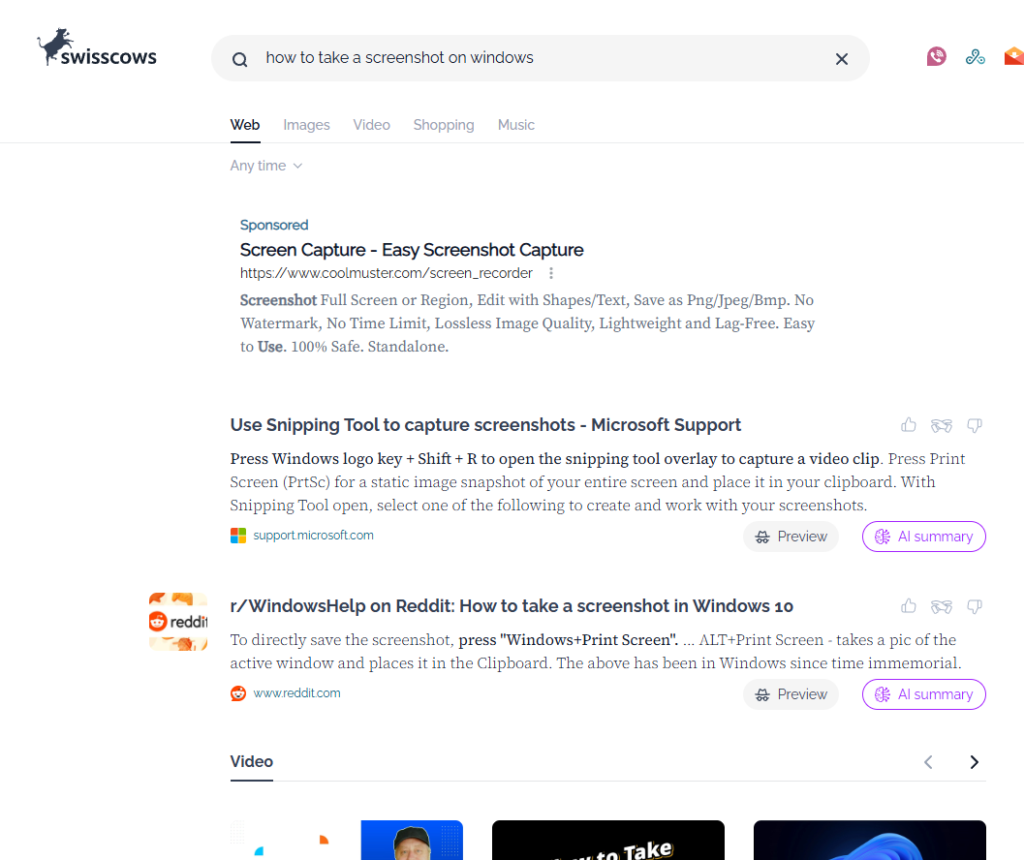
Screenshot from swisscows.com, May 2026
Swisscows is a Swiss-built, family-friendly engine with a semantic-search bent. It uses Bing for general web results but layers its own index on top for German-language queries, and applies AI to interpret query context rather than just match keywords. Crucially, it filters explicit content by design; there’s no toggle, the family-safe stance is baked in.
On privacy, Swisscows doesn’t store, track, or share user data, and its servers are hosted in Switzerland, outside the reach of U.S. and EU data-sharing agreements. That’s a meaningful jurisdictional choice for users who care about where their queries physically live. The trade-off is the same as any Bing-based engine quality tracks Bing’s, with thinner coverage on long-tail English than Google offers.
Best for: families, schools, and privacy-minded users who want safe, context-aware results without the explicit-content risk.
15. KARMA Search
Monthly traffic to domain: 719,398
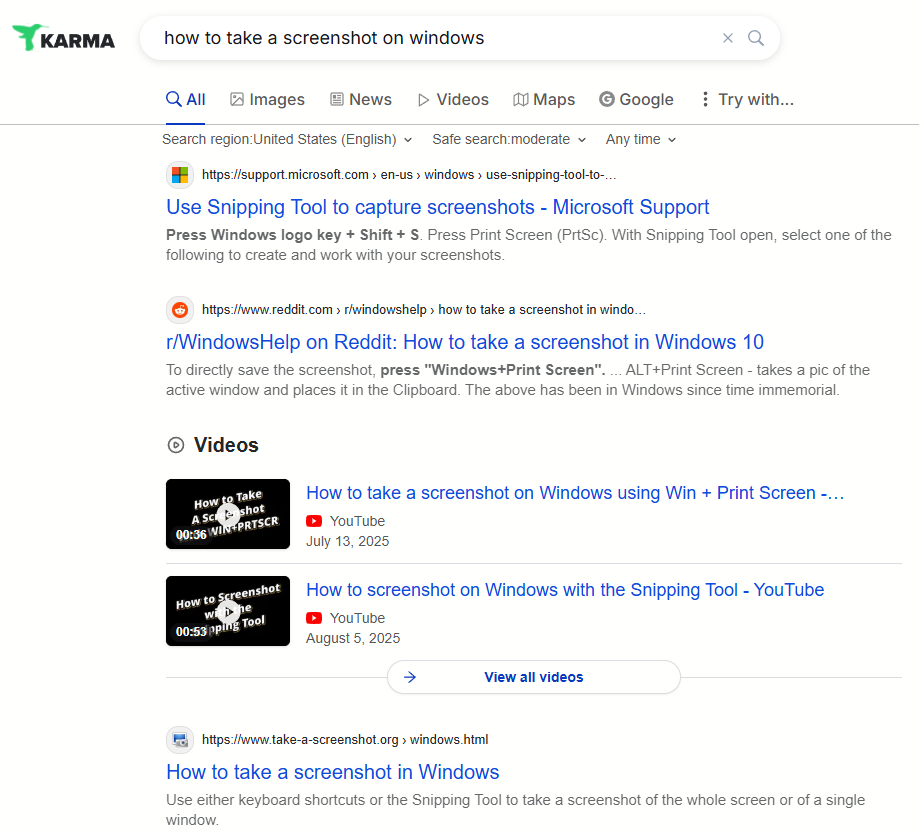
Screenshot fromkarmasearch.org, May 2026
KARMA pairs privacy-respecting search with a charitable angle: it directs the majority of its ad revenue to wildlife and conservation nonprofits like Re:wild, funding real on-the-ground work like anti-poaching patrols and habitat restoration. Results are powered by Brave’s independent index, so the privacy stance is genuine rather than marketing.
What it does well:
- Real-world impact: every search funds conservation projects, with partner organizations published openly.
- Quick shortcuts: one-click jumps to Wolfram Alpha, the Internet Archive, and other vertical tools right from the results.
- Stripped tracking: uses Brave’s network but removes user identifiers so ads aren’t behaviorally targeted.
Traffic is small compared with the privacy heavyweights, so it’s a values-driven pick rather than a search you adopt for sheer quality alone.
Best for: searchers who want privacy and a charitable payoff in the same tab.
Knowledge and on-platform search
Some of the most valuable “search” now happens inside platforms, not engines. If your audience looks for things here, this is where you need to exist.
16. X (formerly Twitter)
Monthly traffic to domain: 4.42 billion
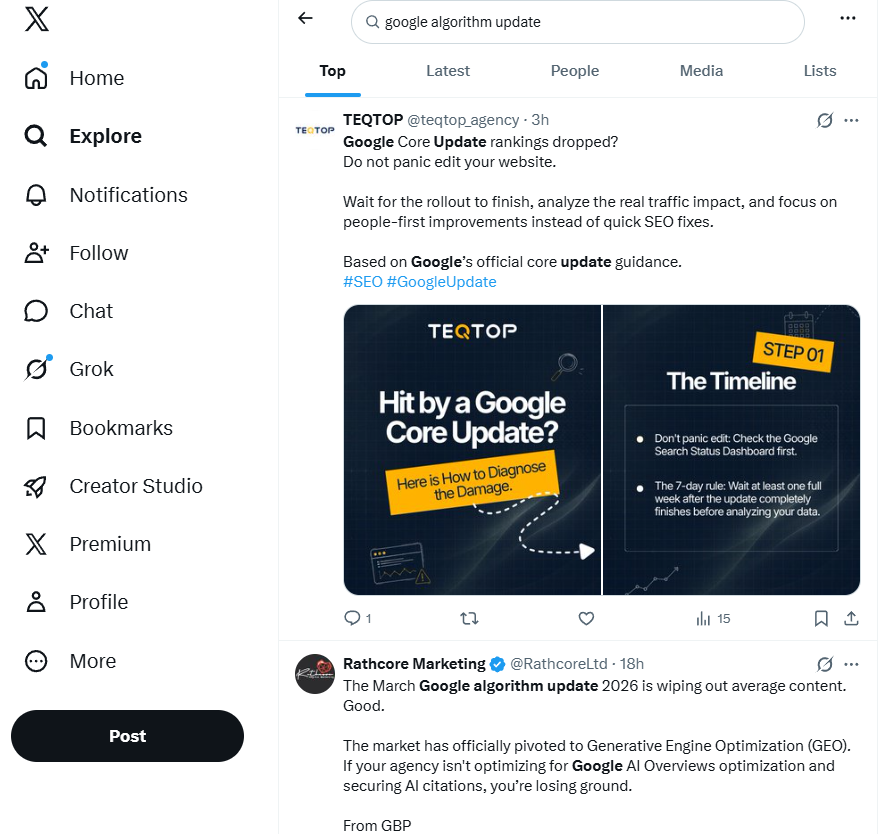
Screenshot x.com, May 2026
For anything happening right now, X is still genuinely unbeatable. Breaking news, live reactions, on-the-ground updates during emergencies, and the public pulse on a topic surface here before any web crawler catches up. The search function is rough around the edges, but the real-time signal underneath is unique and hasn’t been matched by any general engine.
What’s interesting from a marketer’s angle is that X content increasingly feeds into other surfaces. AI engines cite tweets, Google surfaces them in real-time modules, and journalists pull leads from X searches before publishing. Discoverability on X is its own discipline: hashtags, account authority, engagement velocity, and Community Notes all shape what’s findable. The trade-off is signal-to-noise; finding the credible voice in a fast-moving thread is harder than it should be.
Best for: minute-by-minute developments and reading the live public pulse on a topic.
17. LinkedIn
Monthly traffic to domain: 1.66 billion
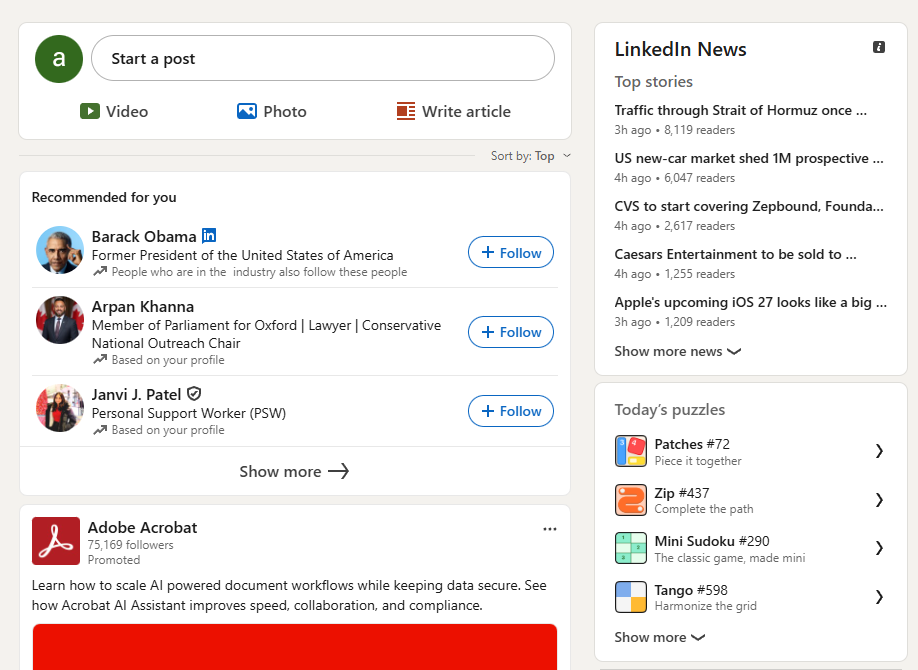
Screenshot linkedin.com, May 2026
LinkedIn has quietly become one of the most important B2B search engines on the internet. People search for companies, roles, decision-makers, and expertise inside the platform constantly without ever bouncing to Google and the algorithm rewards different signals than a web crawler does. Distinctive company page names beat generic ones, real engagement beats keyword stuffing, and recency matters.
The factors that drive LinkedIn search visibility include follower count, employee activity, page completeness, and overlap between the searcher’s network and your page’s connections. For B2B brands, this is closer to local SEO than traditional SEO. Your “ranking” depends as much on social signals as on metadata. The limitation is that everything stays inside the walled garden: LinkedIn’s data doesn’t leak to other engines in any useful way.
Best for: professional research, hiring, and B2B brand discovery where the audience never leaves LinkedIn.
18. SlideShare
Monthly traffic to domain: 38.39 million
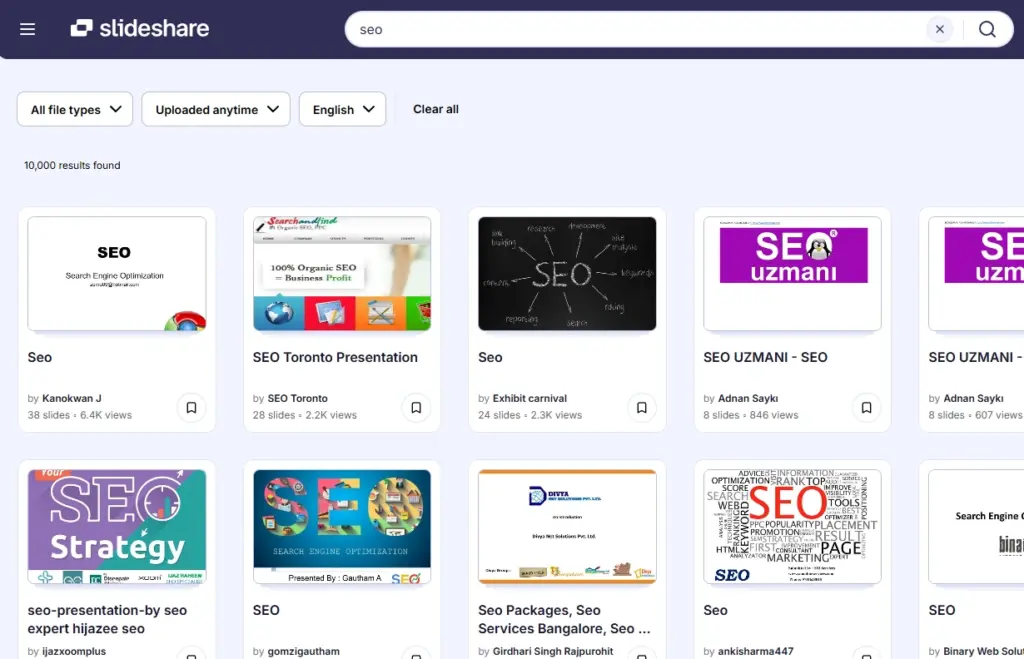
Screenshot from slideshare.net, May 2026SlideShare is a searchable library of presentations, ebooks, PDFs, and infographics, the kind of structured, visual content that articles and blog posts can’t quite replicate. For a long time it sat under LinkedIn’s ownership; it’s now operated independently by Scribd, but the use case hasn’t changed: when you want a deck-shaped explainer or a downloadable industry report, SlideShare often has it.
You can save individual slides, download full decks (where the uploader allows it), and find professional-quality material on niches that text-based search struggles to surface well. For marketers, it’s also a moderately useful publishing surface; well-tagged decks still pull steady organic traffic from Google. The honest limitation is age: a lot of the content is dated, and discovery of fresh, high-quality material is uneven.
Best for: professionals prepping decks or hunting digestible, visual explainers on a topic.
19. Wayback Machine
Monthly traffic to domain: 147.6 million
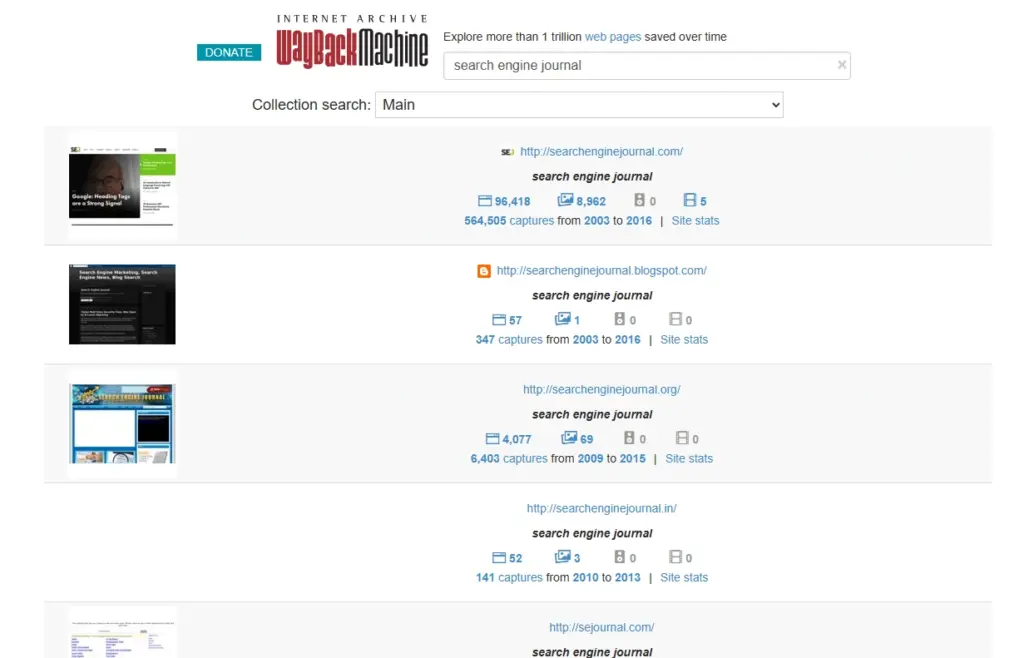
Screenshot web.archive.org., May 2026
The Wayback Machine, run by the Internet Archive since 1996, is the closest thing the web has to a memory. It lets you search and revisit how pages looked at specific points in the past useful for everything from journalism and legal research to recovering content that was quietly deleted or rewritten. Type a URL, pick a date, and you’re browsing the web at that moment.
Around the archive sits the broader Internet Archive: millions of free books, films, music, software, and TV recordings, much of it nowhere else online. For SEO, the Wayback Machine is also a quiet diagnostic tool you can see exactly when a competitor changed their messaging or when a redirect was put in place. The limitation is coverage; not every page is captured, and some sites block the crawler entirely.
Best for: researchers, journalists, and anyone recovering content the live web has erased.
Specialized search
20. WolframAlpha
Monthly traffic to domain: 3.65 million
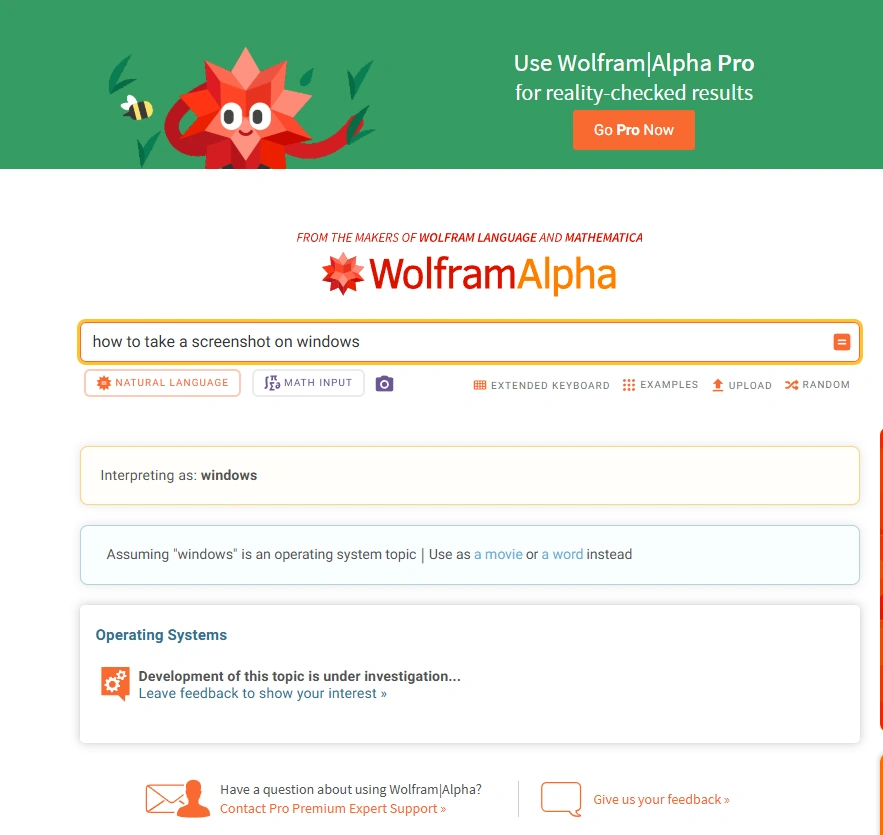
Screenshot wolframalpha.com May 2026
WolframAlpha isn’t a web search engine, it’s a computational one. Built on the Mathematica engine and Stephen Wolfram’s curated knowledge base, it doesn’t link out to pages; it calculates answers across math, physics, statistics, chemistry, finance, linguistics, and dozens of other domains. Ask for a derivative, a unit conversion, a chemical equation balance, or a side-by-side of two companies’ fundamentals and it does the work directly.
For students, engineers, and analysts it’s a serious tool. A Pro tier (starting around $7/month) unlocks step-by-step solutions, file upload, and extended computation time, which matters if you’re using it for actual coursework or research rather than quick lookups. The limitation is the flip side of its strength: if you want pages, links, or an opinion synthesized from the web, this isn’t the tool.
Best for: students, engineers, and analysts who need a computed answer, not a list of pages.
International search engines
In several major markets, Google isn’t the default or isn’t available at all. If you sell internationally, these are non-negotiable.
21. Baidu
Monthly traffic to domain: 1.98 billion
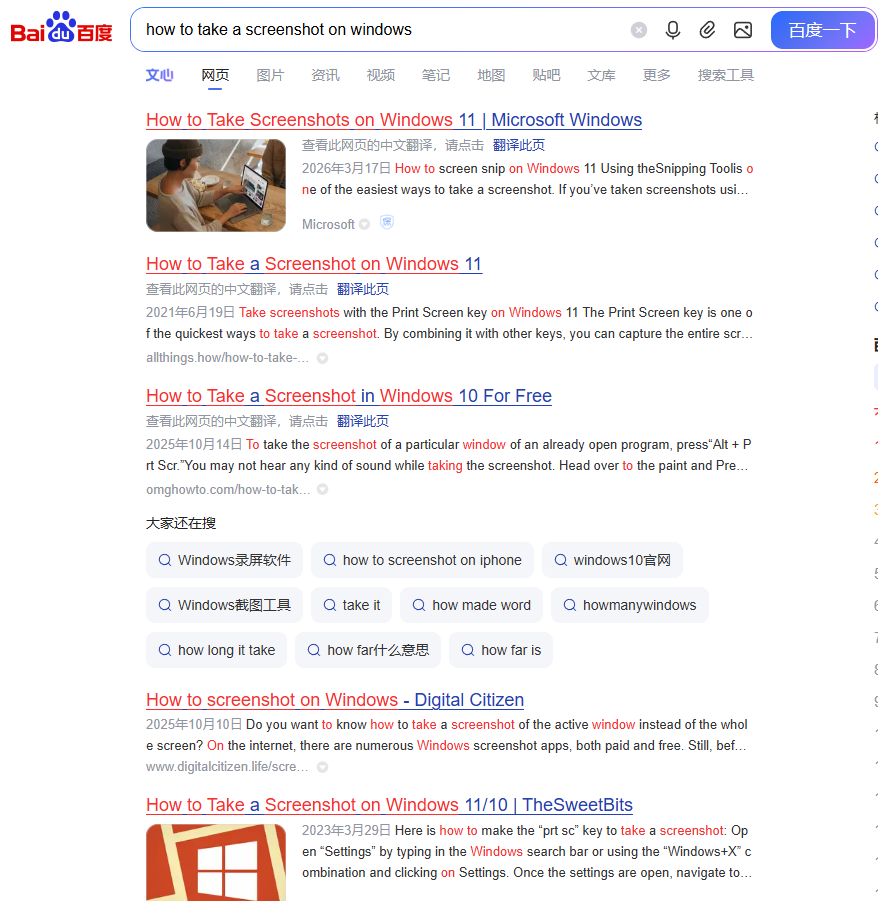
Screenshot baidu.com May 2026
Baidu is the dominant engine in mainland China, with a commanding share of the market in a country where Google is blocked by the Great Firewall. It operates the same way Google does in the West: maps, video, music, an app store, a mobile browser, and a heavy AI push through its Ernie model all tuned to Chinese-language search behavior and tightly regulated by local content rules.
For any brand serious about reaching Chinese consumers, Baidu isn’t optional, it’s the only door in. Optimization is its own discipline: hosting inside mainland China matters, ICP licensing is often required for proper indexing, and content moderation rules are stricter than anything Western SEO contends with. The trade-off is the regulatory overhead. If you’re not committed to a real China strategy, dabbling in Baidu rarely pays off.
Best for: any brand targeting Chinese audiences and prepared to do the regulatory work properly.
22. Yandex
Monthly traffic to domain: 185.1 million

Screenshot from yandex.com, May 2026
Yandex is Russia’s leading engine, dominant in Russian-speaking markets including Belarus, Kazakhstan, and parts of Central Asia. Its product suite mirrors Google’s maps, mail, browser, cloud, even self-driving research at one point and its search index understands Russian-language nuance, transliteration, and Cyrillic search patterns better than any Western alternative.
Yandex Webmaster Tools is reasonably mature and worth using if Russian-speaking traffic matters to your business the platform exposes detailed query data, crawl statistics, and indexation info. The honest context is the geopolitical one: Yandex’s global footprint has narrowed significantly since 2022, and a major 2023 leak of its ranking signals shook trust in some quarters. Inside its core markets, though, it remains the default.
Best for: brands operating in Russian-speaking regions where Yandex still owns the everyday-search habit.
23. Sogou
Monthly traffic to domain: 24.91 million
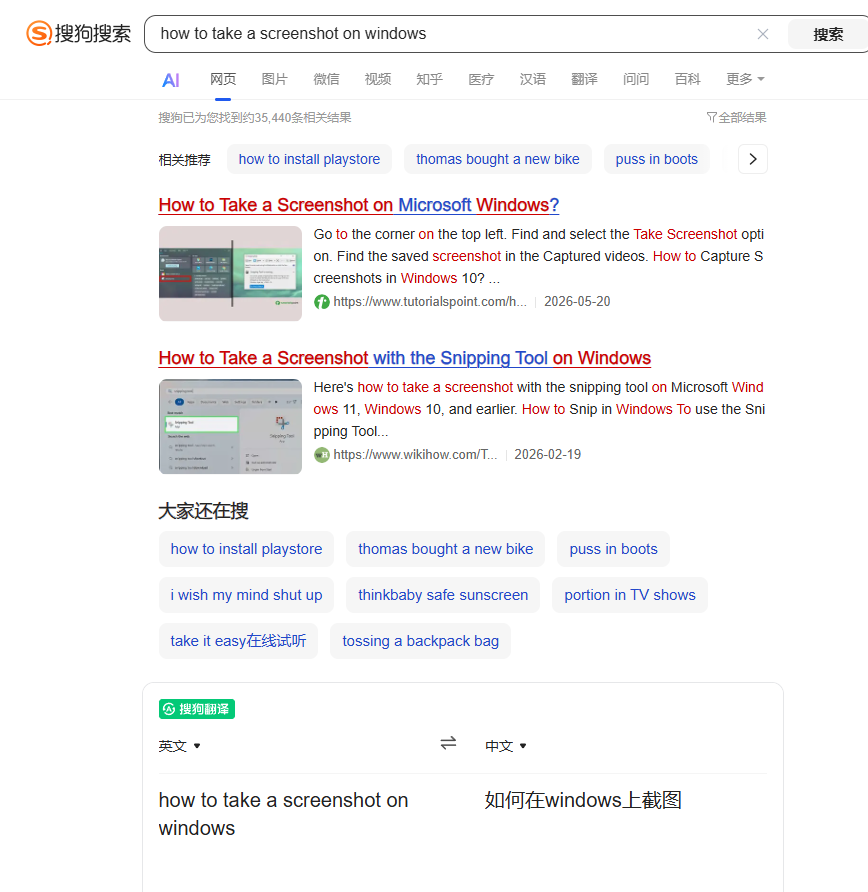
Screenshot from sogou.com, May 2026
Sogou is the second-tier Chinese engine with a useful structural advantage: it’s the default search inside WeChat, China’s super-app. That alone makes it interesting, because WeChat content (official accounts, Mini Programs, articles) is otherwise hard to surface from outside the app. Sogou is the bridge.
Beyond WeChat, it offers solid English search and one of the better Chinese-English translation tools in the market, plus its own AI-driven ranking system. Market share in China is well below Baidu’s, but Sogou’s distribution through WeChat means it reaches audiences that Baidu sometimes misses, particularly younger and mobile-first users. The trade-off is scale: most international brands prioritize Baidu first, and Sogou tends to be a secondary play once the larger strategy is in place.
Best for: brands trying to reach Chinese users who search inside the WeChat ecosystem.
24. Naver
Monthly traffic to domain: 1.59 billion
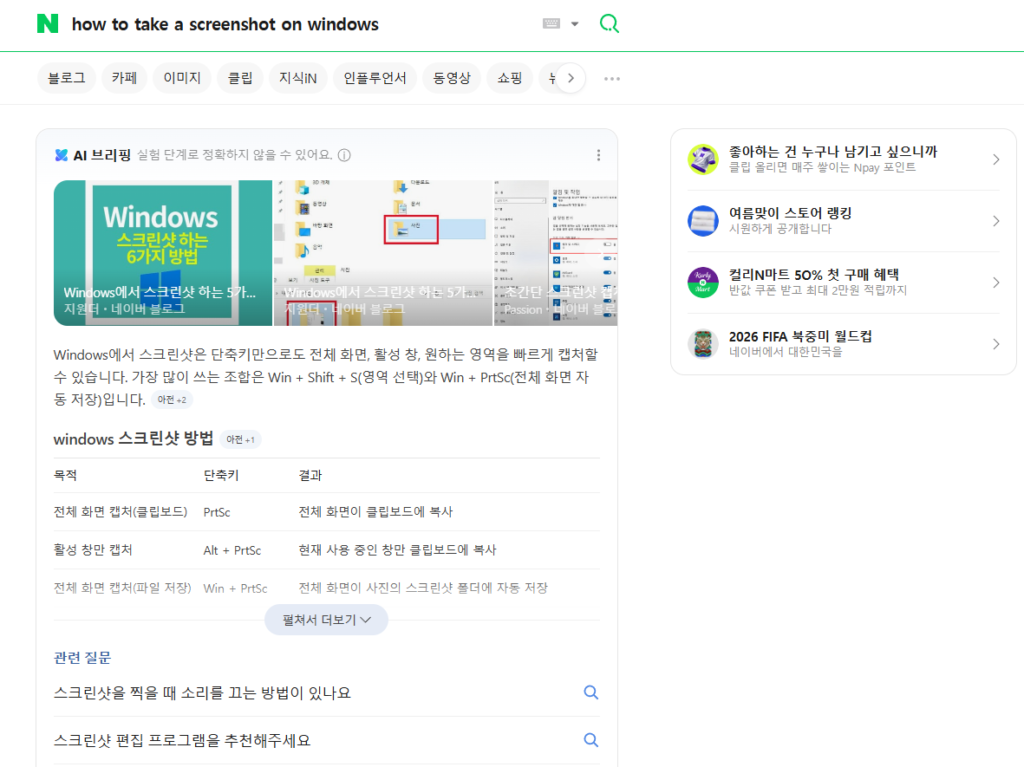
Screenshot from naver.com, May 2026
Naver is South Korea’s homegrown search giant, and one of very few markets where Google doesn’t run away with the lead. The two trade the top position depending on the measure and the demographic. It’s really a content portal as much as a search engine: blogs, Q&A (Knowledge iN), shopping, news, maps, and reviews are all native to the platform, and Korean users trust Naver’s curated answers more than open web results.
That structure shapes optimization. Showing up means publishing inside Naver’s properties, running a Naver Blog, building a presence in Knowledge iN, listing on Naver Shopping rather than just optimizing your external website. Naver Search Advisor is the webmaster tool of record. The trade-off is the lift required: succeeding on Naver is closer to running a sub-brand inside the platform than to traditional SEO.
Best for: any brand serious about reaching the South Korean market on its own terms.
FAQ
What is the best alternative to Google?
It depends on what you’re optimizing for. For privacy, DuckDuckGo and Brave lead. For AI answers with sources, ChatGPT Search and Perplexity are strongest. For independence from Big Tech indexes, Brave, Kagi, and Mojeek crawl the web themselves. There’s no single winner that matches the engine to your priority.
Which search engine does not track you?
DuckDuckGo, Brave Search, Startpage, Mojeek, and Swisscows all decline to build a profile on you. Startpage even serves Google results without Google’s tracking, while Brave and Mojeek run independent indexes and store nothing about your searches.
Are AI search engines replacing Google?
Not replacing fragmenting. Google still holds around 90% of global search, but AI tools like ChatGPT Search and Perplexity are absorbing a growing share of informational queries, and Google’s own AI Mode is its response. The smart move is to be visible across both, not bet on one.
What is the best private search engine?
DuckDuckGo is the most popular and the easiest switch, offering mainstream-quality results with no tracking. If you want a fully independent index, Brave Search is the strongest pick; if you’ll pay to remove ads entirely, Kagi is the standout.
Which search engines dominate outside the US?
Three markets reject Google’s lead: Baidu in China, Yandex in Russia, and Naver in South Korea (where it trades the top spot with Google). If you sell internationally, optimizing only for Google leaves those audiences effectively blind to you.
Do I need to optimize for engines other than Google?
If your audience uses them, yes. That increasingly includes AI answer engines and, for international brands, regional leaders. The work isn’t a separate budget line it’s the same structured, trustworthy, machine-legible content pointed at more surfaces.
The Loop take
Google isn’t going anywhere, but “search” has quietly stopped meaning “Google.” It now means an AI answer, a privacy engine, an app’s internal search, or a regional giant you’ve never optimized for. The brands that win the next few years won’t be the ones obsessing over a single ranking they’ll be the ones built to be found, and cited, wherever the question gets asked.
That cross-surface discoverability is the work we do at Loop. If you want to know where your brand is visible, where it’s invisible, and what to fix first, explore our SEO + AEO work or dig into 2026 performance marketing trends.
Comments are closed