A moodboard is what converts scattered creative ideas on how a brand should feel into a visual direction your team can actually see, discuss, and start building off from.
A creative brief can say a brand should feel “premium,” “modern,” or “confident.” But these words can mean very different things to different people.
One may picture it as minimal typography and white space, while someone else can be imagining dramatic photography and bold color.
This is where a moodboard is helpful.
So, what is a moodboard? It is a curated collection of visual references used to communicate the intended look, tone, and atmosphere of a brand, campaign, website, or other creative project.
But a good moodboard does not stop at collecting inspiration. It turns brand strategy into a visual direction and keeps everyone on board before the team starts producing finished creative.
What Makes a Moodboard?
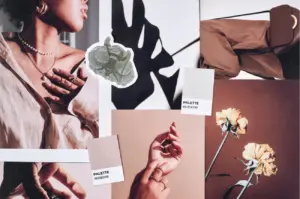
The references on a moodboard can include photography, typography, color, textures, layouts, graphic treatments, materials, and other visual references that can be an expression.
Design teams draft moodboards early on in the creative process to pave a direction and make sure all people involved are aligned.
The important word when it comes to moodboards is being curated.
A folder full of images you like is inspiration.
A moodboard should communicate a decision to be followed up on.
For example, If a skincare brand wants to feel clinical but approachable, its board might combine clean surfaces, controlled lighting, close-up textures, restrained typography, and softer natural details.
Together, these creative factors combine to explain and set the layout for what “clinical but approachable” looks like for them.
Something to note is that none of those references needs to appear in the final campaign.
Why Moodboards Matter
The biggest benefit of a moodboard is that it makes those subjective lightbulb ideas easier to discuss and share expressively.
A moodboard gives the team something more concrete to react to before time is spent designing a campaign, website, or full identity system.
It can also help:
- Align marketers, designers, founders, and other stakeholders
- Establish creative guardrails
- Improve feedback
- Reduce major changes later in production
- Keep work more consistent across channels
This is very useful when you need consistency across different teams that are creating social posts, ads, landing pages, photography, email, and other assets under the same brand.
What Should Be Included in a Moodboard?
While there is no fixed formula to follow, every reference gathered should help communicate the same overall direction.
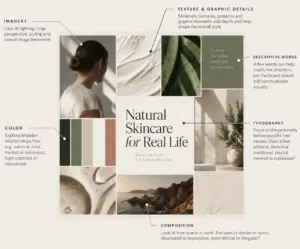
Imagery
Look beyond the subject of the photo.
Give more attention to lighting, crop, perspective, movement, styling, environment, and image treatment.
There can be two photos of the same product that can communicate completely different brands.
Color
When it comes to the final brand palette, you do not necessarily need to come to a decision just yet.
A moodboard gives you the freedom to explore broader relationships first to see which direction your brand is heading: warm or cool, muted or saturated, high contrast or restrained.
Typography
Focus on the personality before specific font names.
Think of the emotions or the nature you want to have, does the typography feel editorial, technical, traditional, playful, minimal, or expressive?
Exact typeface decisions can come later.
Composition
How you use the space matters too when organizing the references.
Look at whether layouts feel dense or open, structured or expressive, symmetrical or irregular.
Try to leave negative space instead of having a cluttered set of references, it allows you to clearly see the ideas that you want to gather from the mood board.
Composition can influence a brand just as much as color with a full glance at the board.
Texture and Graphic Details
Materials, patterns, shapes, gradients, linework, icon styles, and other visual treatments can help define the wider creative system.
A few short descriptive words can also help clarify what the team should notice, things like quotes or lyrics, but the board should still communicate visually.
Moodboard vs. Brand Board vs. Style Guide
These tools are related, but they serve different purposes.
Tool | Purpose |
Moodboard | Explores and communicates visual direction |
Creative brief | Defines the audience, objective, message, and project requirements |
Brand board | Summarizes selected identity elements such as logos, colors, and fonts |
Brand guidelines | Documents how established brand elements should be used |
The main difference between all of these is the timing.
A moodboard is what helps explore a specific direction before all the final visual decisions have been made.
Brand guidelines then develop and document those decisions after the identity has been established.
How to Create a Moodboard

1. Start With the Strategy
Start with the audience, positioning, project objective, and the perception you want to create.
What should people understand about the brand?
How should it feel different from competitors?
What does the creative need to communicate?
At Loop, that same strategy-first thinking also guides ad creative, where the audience, message, offer, and creative direction need to work together.
2. Turn Brand Words Into Visual Ideas
Broad words need to become more specific.
Instead of simply saying “premium,” ask what kind of premium you mean.
Quiet and minimal?
Editorial and fashion-led?
Detailed and handcrafted?
Technical and precise?
Each answer produces a different moodboard.
3. Collect Broadly
Look beyond competitors.
References can come from fashion, architecture, packaging, magazines, film, interiors, photography, or a completely different industry that you may find yourself curious about.
The goal is to gather enough material to identify a visual direction instead of simply copying what other brands in the category are doing.
4. Edit Aggressively
This is where a moodboard becomes useful.
Remove references that only look good but go through a different direction.
If one half of the board feels quiet and minimal while the other feels loud and playful, the team may still need to make a decision.
A smaller, focused board is often more useful than a cluttered large collection with no clear point of view.
5. Look for Patterns
Once the board is tighter, think of what keeps popping up or repeating
Maybe it is natural light in different photos.
Oversized typography.
Close crops.
Muted colors.
Large amounts of whitespace.
Those patterns are usually providing more insight than an individual image because they can guide original creative later.
Common Moodboard Mistakes
One of the biggest mistakes when creating a moodboard is confusing collecting with curating.
Having a library full with dozens of attractive references that might look great on their own does not automatically give a team a direction to follow.
Another mistake is relying heavily on trends. A visual style might be popular right now without saying anything meaningful about the brand. Many brands can also get stuck in fads that will eventually lose its spark after a while.
When it comes to looking at competitors, it is easy to try to replicate what they are doing to understand category conventions, but it can also lead to every brand looking increasingly similar.
Most importantly though, try not to look at it with your own perspective or personal feelings.
The question should not be:
“Do I like this?”
It should be:
“Does this direction support how we want the brand to be perceived?”
What Happens After the Moodboard?
Once a moodboard is approved, it should continue to guide the project.
For a campaign, that might influence photography, video treatments, graphic design, typography, and paid social creative.
For a website, it can influence imagery, hierarchy, spacing, motion, and interface personality.
For social, it can help different creators produce varied content without making the brand feel disconnected from post to post.
The goal is not to try to replicate the moodboard image by image, but to preserve the visual principles that it holds and use it to guide every sector needed.
How Loop Agency Thinks About Moodboards
At Loop, visual direction starts with understanding the brand, the audience, and what the work needs to communicate.
That can mean helping define the positioning, sharpen the message, establish the creative direction, and then use tools like moodboards to turn those ideas into something the wider team can clearly understand and build from.
The same thinking carries across branding, websites, social content, campaigns, and creative advertising, with strategy and execution working together rather than as separate steps.
Whether your team is still figuring out what the brand needs to say or already has a direction that needs to be brought to life, Loop Agency can help shape the strategy, creative, and execution around it.
Frequently Asked Questions
What is a moodboard in simple terms?
A moodboard is a collection of visual references used to communicate how a brand, campaign, website, or other creative project should look and feel.
What is the purpose of a moodboard?
Its purpose is to make creative direction easier to understand and discuss before finished work is produced. It helps teams align around visual ideas earlier in the process.
What should be included in a moodboard?
A moodboard can include photography, colors, typography, textures, layouts, materials, graphic treatments, and short descriptive phrases.
What is the difference between a moodboard and a brand board?
A moodboard explores a potential visual direction. A brand board usually summarizes identity elements that have already been selected, such as logos, colors, and fonts.
How many images should be on a moodboard?
There is no perfect number. Use enough references to clearly communicate the direction without creating unnecessary noise. Clarity matters more than quantity.
Comments are closed